Category: Business

  • Zerodha unveils new incentive as Nithin Kamath seeks to simplify investing

    Zerodha unveils new incentive as Nithin Kamath seeks to simplify investing

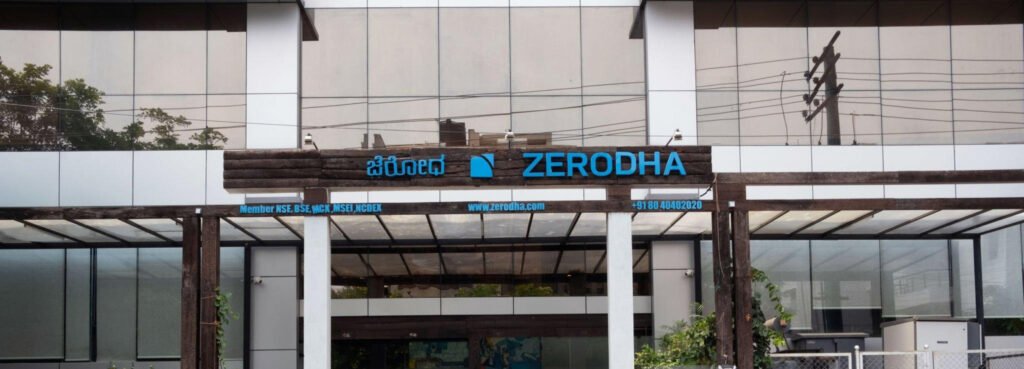
    On June 3, Zerodha co-founder Nithin Kamath announced a major decision regarding demat transfer costs. India’s largest stockbroker, Zerodha, will now refund the charges investors incur when transferring their holdings to the platform.

    Kamath shared the announcement on X on Wednesday. “The average investor typically has 2–3 demat accounts with holdings spread across them,” Kamath wrote. “The problem with this is that it makes tracking one’s investments and filing taxes a nightmare.”

    As part of an effort to address the difficulties and costs investors face when transferring their holdings, Kamath said Zerodha will refund these transfer charges.

    Zerodha
    Credit: Karen Dias/Bloomberg via Getty Images

    “To make it easy for people to move their holdings to their @zerodha account, we’ll now refund all depository charges (DP charges) that you incur to move your holdings to Zerodha. With this charge gone, pretty much everything at Zerodha is free, including investing in stocks, ETFs, direct mutual funds, and bonds,” he wrote.

    Simply put, Zerodha will bear the cost that investors would otherwise have to pay to their existing broker. For example, if an investor holds stock in Groww and wants to transfer those holdings to Zerodha, they may be required to pay DP charges. Under the new policy, Zerodha will refund those charges.

    This move could have two major implications. One for investors and another for Zerodha’s customer acquisition efforts.

    First, the DP charge refund removes a key hurdle that may discourage investors from transferring their holdings. It could also make portfolio tracking easier, streamline tax filing, and provide investors with a clearer view of their overall wealth.

    Second, the policy could help Zerodha attract a significant volume of customer assets and holdings from competing platforms.

    That is why Kamath described the move as a way to make it easier for people to consolidate their portfolios.

  • ‘Business of business’: Uday Kotak calls Google’s $80 billion fundraising a ‘wake-up call’ for Indian investors

    ‘Business of business’: Uday Kotak calls Google’s $80 billion fundraising a ‘wake-up call’ for Indian investors

    Google’s parent company, Alphabet, has announced that it will raise $80 billion to address developments in Artificial Intelligence in the near future. The deal includes stock-based fundraising, direct investment, and a flexible drip feed mechanism.

    But since this huge 80-billion-dollar update came out, Kotak Mahindra Bank’s Uday Kotak couldn’t help but call out Indian investors.

    Kotak wrote a post on X on June 2, saying that this is a “wake-up call” to investors that a highly profitable company like Alphabet has announced to raise capital for AI innovations and infrastructure.

    Uday Kotak
    Uday Kotak, chief executive officer of Kotak Mahindra Bank Ltd., during the Business 20 (B-20) Summit in New Delhi, India, on Saturday, Aug. 26, 2023. The B-20 is a business summit associated with the Group of Twenty (G-20) leaders’ meeting, scheduled to take place in New Delhi in September. Photographer: Prakash Singh/Bloomberg via Getty Images

    “Google, which is cash surplus, just announced an additional capital raise of $80 bn,” Kotak wrote. “Google’s annual profit is $160 bn, last quarter $62 bn, and market cap $4.5 trillion. That is close to the total profits and market cap of all Indian listed companies put together. It’s a wake-up call to all companies to invest in the future, whatever the present may be. Now that IPL is done and dusted, time for India to focus on business.”

    The race for the acquisition of marketplaces for AI is huge, along with the need for its infrastructure and the funding to grow Gemini and other AI tools.

    To talk about Alphabet’s 80-billion-dollar move, the fundraising package totals $80 billion, but not all of the amount will be deployed immediately.

    The package includes an initial $30 billion raise and a $10 billion investment from Berkshire Hathaway. But then comes the drip-feed mechanism of a $40 billion facility, which allows the company to issue shares gradually if additional capital is required.

    This structure gives Google significant financial flexibility as it expands investments across AI, cloud infrastructure, and other growth initiatives.

    Importantly, a fundraiser by one of the largest and most profitable companies highlighted why Indian and other investors should now focus on innovation, infrastructure, and future investment.

    According to the 2026 State of India’s Digital Economy, India ranks fourth globally in AI performance. Compared to the USA and China, India is way behind in terms of innovation, government spending on AI, and infrastructure.

    For example, according to the Stanford AI Index Report 2025, India’s cumulative private investment in AI from 2013 to 2024 reached approximately $11.1 billion, whereas the United States invested over $100 billion in 2024 only.

    On the flip side, India was ranked 3rd in the Stanford Global AI Vibrancy 2025 report for AI competitiveness and ecosystem vibrancy. Many private investors are also taking steps to help grow India into a major AI hub. For example, the Tata Group has announced it will invest $11 billion in Maharashtra to develop an AI innovation city.

    But Mr. Kotak pointed to the future. AI is projected to add $4.4 trillion to the global economy, per Forbes. AI is an expanding ocean, and Indian investors should take a deep dive into that ocean.